
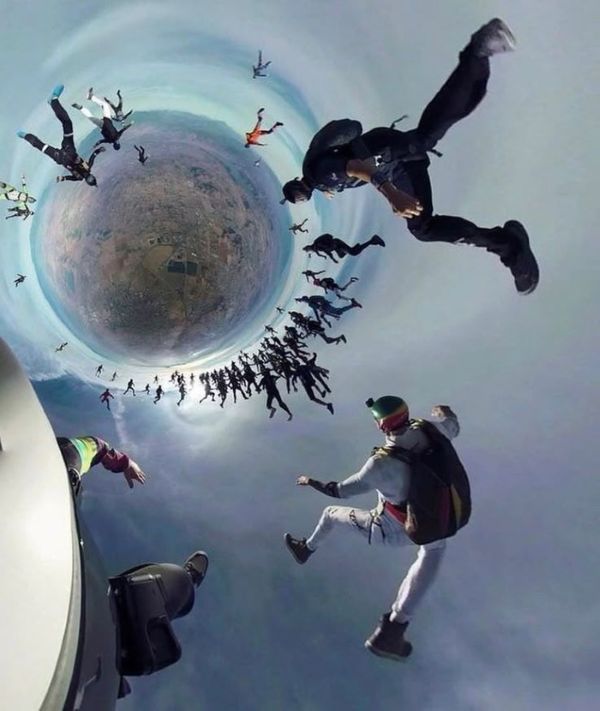
There’s a specific kind of shift that happens in your brain when you step off a plane in a city where you don’t speak the language and nobody knows your name. At home, our lives feel massive. Our problems—the late email, the broken appliance, and the awkward social interaction—fill up our entire field of vision.
But travel has a way of shrinking those problems by showing us just how vast the world really is. It’s a transformational education that forces you to realize that the “default” path we’re taught to follow is just one of a million ways to exist.
In his piece How Travel Changes Your Perspective on Money and Society, Shaun Gurmin explores how stepping across borders breaks the mental chains of our expectations:
“Travel isn’t just a hobby—it’s a transformational education… It teaches that the world is bigger and freer than most people realize.”
The Great Exchange: Trading “Stuff” for Stories
One of the most profound lessons we learn on the road is that value is usually found outside material accumulation. When you have to fit your entire life into a suitcase or a backpack, you quickly learn which “items” actually matter.
We’ve been conditioned to believe that wealth is measured by what we own—the house, the car, the latest tech. But travel changes everything. You begin to realize that happiness and satisfaction come from relationships, experiences, and freedom. You realize that a $3,000 salary isn’t a fixed measure of success; it’s a tool. Depending on your location, that same amount of money can mean struggle or total liberation.
When you prioritize the experience over the possession, your spending habits don’t just change—your long-term goals do. You stop working to buy things and start working to buy time.
Finding Perspective in the Vastness
There is a certain humility in realizing how small we are in the grand scheme of things. Seeing how arbitrary national borders can be, or watching how a community thrives halfway across the globe with completely different social rules, creates a profound sense of empathy.
It makes you question:
- The Arbitrary Norms: Why do we feel pressured to work a 9-to-5 or stay in one place for decades?
- The Metric of Success: Is it wealth, or is it control over your location and lifestyle?
- The Global Pattern: How are resources distributed, and what can we learn from how others find joy in the mundane?
Reclaiming Your Freedom
Ultimately, travel teaches us that freedom is the real currency. Money is just one of the tools we use to buy it. When you experience different societies, you stop following a prewritten script and start designing your own life.
You realize that while you are small, you are also incredibly free to move, to learn, and to change. The world isn’t just a place to see; it’s a lens through which we finally see ourselves clearly.
Don’t wait for a “final version” of your life to start exploring. Whether it’s a flight across an ocean or just a walk through a part of town you’ve never visited, look for the unusual moments that stretch your time and your perspective. Trust the impermanence of your current worries—the world is much too big for them to stay heavy forever.


Leave a Reply